

Development and implementation of high-tech solutions for monitoring, purification, and rational use of water resources in the North Kazakhstan region to ensure public health
The IRN BR28712227 project is being implemented under program-targeted funding for 2025–2027 by the Ministry of Science and Higher Education of the Republic of Kazakhstan.
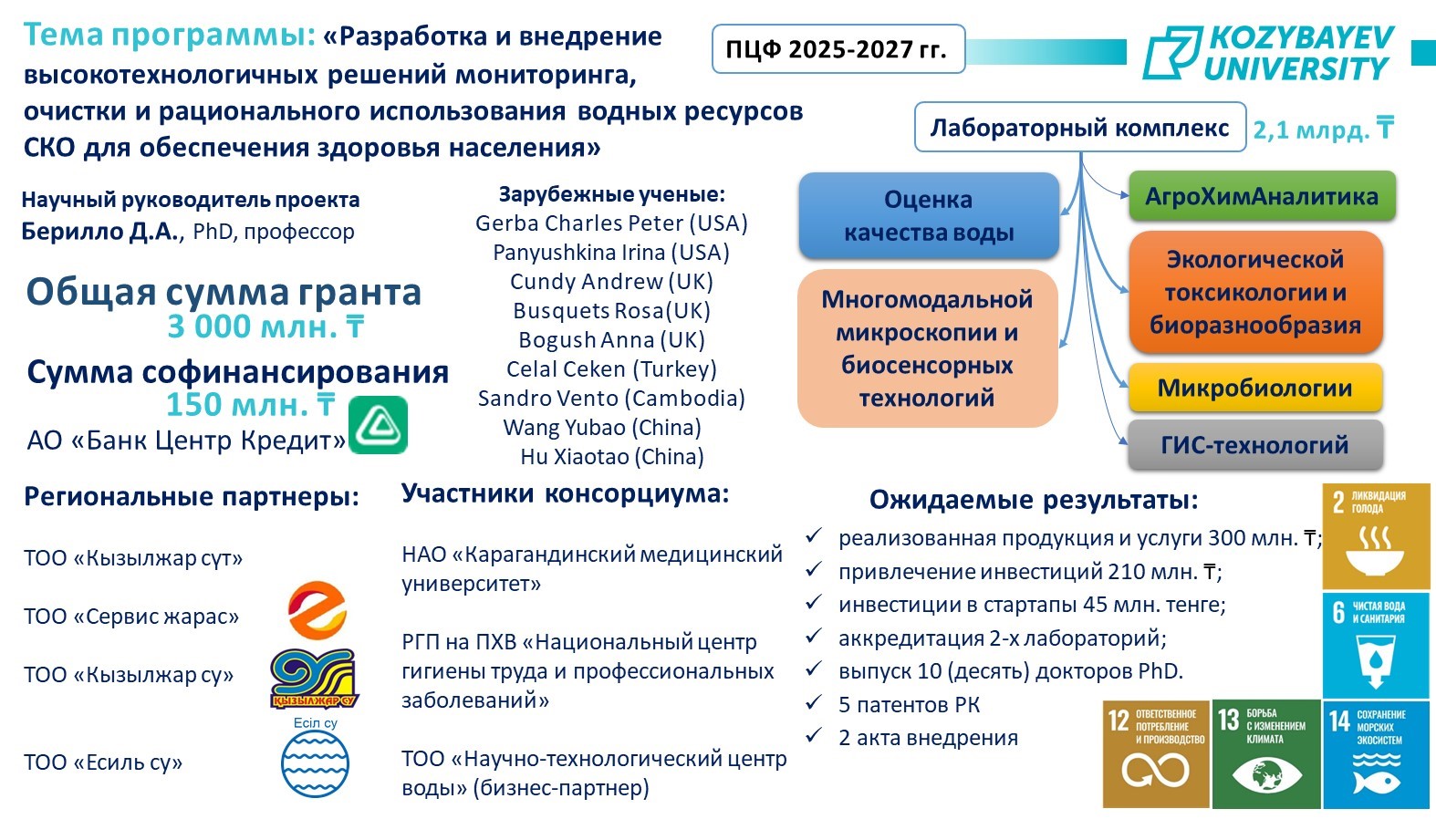
Program Leader: Y.M. Issakayev, Candidate of Biological Sciences, Chairman of the Executive Board - Rector of NPLC "M. Kozybayev North Kazakhstan University"/
Scientific Supervisor of the Project: Dmitry Aleksandrovich Berillo, PhD, Professor at M. Kozybayev North Kazakhstan University (h-index 24, Scopus), daberillo@ku.edu.kz
Coordinator of the project: A.A. Kakabayev, Candidate of Biological Sciences, Member of the Board for Science and Innovation, and A.S. Shayakhmetova, Candidate of Agricultural Sciences, Dean of the Agrotechnological Faculty.
Program completion dates: 2025-2027
Total amount of funding: for the entire duration of the program – 3,000,000 thousand tenge
2025 – 1,000,000 thousand tenge,
2026 – 1,000,000 thousand tenge,
2027 – 1,000,000 thousand tenge.
The purpose of the project: To create a scientific and technological center on water issues, aimed at introducing high-tech approaches to solving practical problems of ensuring health, food security and sustainable economic development of the North Kazakhstan region.
Expected results:
At the time of completion of the Program, the following will be provided:
- the volume of high-tech products and/or engineering services sold must be at least 10% of the amount allocated under the scientific and technical assignment.
- the volume of attracted investments in fixed assets for development should be at least 7% of the amount allocated according to the scientific and technical assignment;
- availability of tax deductions based on the results of the sale of high-tech products and services;
- registered at least 3 (three) startups that develop innovations and/or commercialize the results of scientific and/or scientific and technical activities;
- the amount of funds (investments) raised for the development of start-ups developing innovations and/or commercializing the results of scientific and (or) scientific and technical activities should be at least 1.5% of the amount allocated according to the scientific and technical assignment;
- organization of scientific, technological and business acceleration events with the participation of at least 30 scientists and specialists;
- graduation of at least 10 (ten) PhD doctors in the field of scientific and technical assignment;
- publication of at least 10 (ten) research articles in peer-reviewed scientific journals indexed in the first two quartiles (Q1, Q2) by impact factor in the Web of Science database and (or) having a CiteScore percentile in the Scopus database of at least 50 (fifty) to the specified publications in selected scientific and technical assignment;
- publication of at least 20 (twenty) research articles in journals recommended by the COKNVO;
- at least 3 (three) patents in foreign patent offices (European, American, Japanese, British) or at least 1 (one) foreign or international patents included in the Derwent Innovations Index (Web of Science, Clarivate Analytics) database or at least 5 (five) intellectual property objects (patent; for applications in the field of information technology - copyright certificate), registered at the National Institute of Intellectual Property of the Republic of Kazakhstan.
- at least 1 (one) license agreements and agreements on assignment of intellectual property rights;
- obtaining an accreditation certificate and/or a license for the type of activity carried out by scientific and technical assignments in accordance with the Legislation of the Republic of Kazakhstan.
- accreditation or extension of the scope of accreditation for laboratories according to the program profile.
- the purchased equipment must be registered on the unified electronic laboratory platform (e-lab).
As a result of the program, the following expected results will be achieved:
- Recommendations have been developed to minimize epidemic risks associated with contamination of groundwater and surface waters, including during floods.
- The results of a hygienic assessment of the quality of drinking water in North Kazakhstan settlements have been obtained.
- The results of an epidemiological assessment of the impact of the water quality of underground and surface water sources of North Kazakhstan region on the health of the population, including the risks of seasonal changes during the flood period, have been obtained.
- A model has been created for predicting the epidemiological situation of water quality in underground and surface water sources during seasonal flood changes.
- For the first time, an information database has been created on the content and spatiotemporal characteristics of pathogenic and conditionally pathogenic microorganisms in wastewater of North Kazakhstan region.
- Recommendations for monitoring microorganisms in water use sites in the post-flood period have been developed and tested in order to prevent outbreaks of infectious diseases in North Kazakhstan region.
- A mobile laboratory for chemical and microbiological analysis of water has been established.
- A factorial model of the vital activity of pathogens in irrigation waters of North Kazakhstan region has been developed.
- A mobile application has been created for rapid testing of an increase in the concentration of pathogens in irrigation water.
- For the first time, a conclusion was formed on the possibility of rehabilitation of water bodies exposed to toxic blooms and/or anthropogenic effects (based on changes in the hydrobiological and hydrochemical composition of water).
- Mapping of the territory was carried out, indicating the sources of microbial contamination, open water sources used for centralized domestic drinking water supply.
- Methods and criteria have been developed for bioindication of the main water bodies of North Kazakhstan region, including the Yesil, border reservoirs (Sergeyevskoye) and the largest lakes, taking into account the requirements of regulatory legal acts of the Republic of Kazakhstan and scientific recommendations.
- A nomenclature of biological species living in the reservoirs of North Kazakhstan region has been created and an assessment of the toxic and mutagenic effect of water resources on the genetic apparatus of animals has been carried out.
- For the first time, a web portal based on GIS technologies for data on reservoirs with an increased level of genotoxicity has been created and recommendations for their use in economic activities have been developed.
- For the first time in the Republic of Kazakhstan, scientifically based recommendations have been developed and a report has been prepared on the effectiveness of biological rehabilitation technology using a strain of Chlorella vulgaris microalgae SKO A RKM-0870 to improve the quality and safety of commercial fish.
- A web portal based on GIS technologies has been created on the impact of changes in the hydrological regime on the quality of life and human health, as well as on agriculture and production in North Kazakhstan region.
- An interactive map of the riverbed of the Yesil River in North Kazakhstan region has been developed with updating of data on the hydrological regime in real time.
- A promising model for assessing and predicting the processes of spring flooding has been created.
- Conceptual and legal frameworks of regulatory legal acts have been developed in order to improve the quality of life and health of the population in North Kazakhstan region.
- A hackathon was held among students to create prototypes of mobile applications for managing renewable energy sources and irrigation systems
- Innovative educational programs have been developed aimed at the formation of new personnel in the field of life sciences and healthcare.
- Course programs have been developed in the field of epidemiology and public health.
- Effective methods of water quality control for watering farm animals have been developed.
- Software and hardware tools have been developed to automate the irrigation complex, ensuring the implementation of the necessary irrigation processes, taking into account the savings in water and energy consumption.
- A scientific and technological complex with accredited laboratories has been created.
- Analytical and statistical calculations have been carried out to quickly respond to changes in the quality of water used in agricultural production.
- Provision of scientific substantiation services for the introduction of modern irrigation systems in crop production.
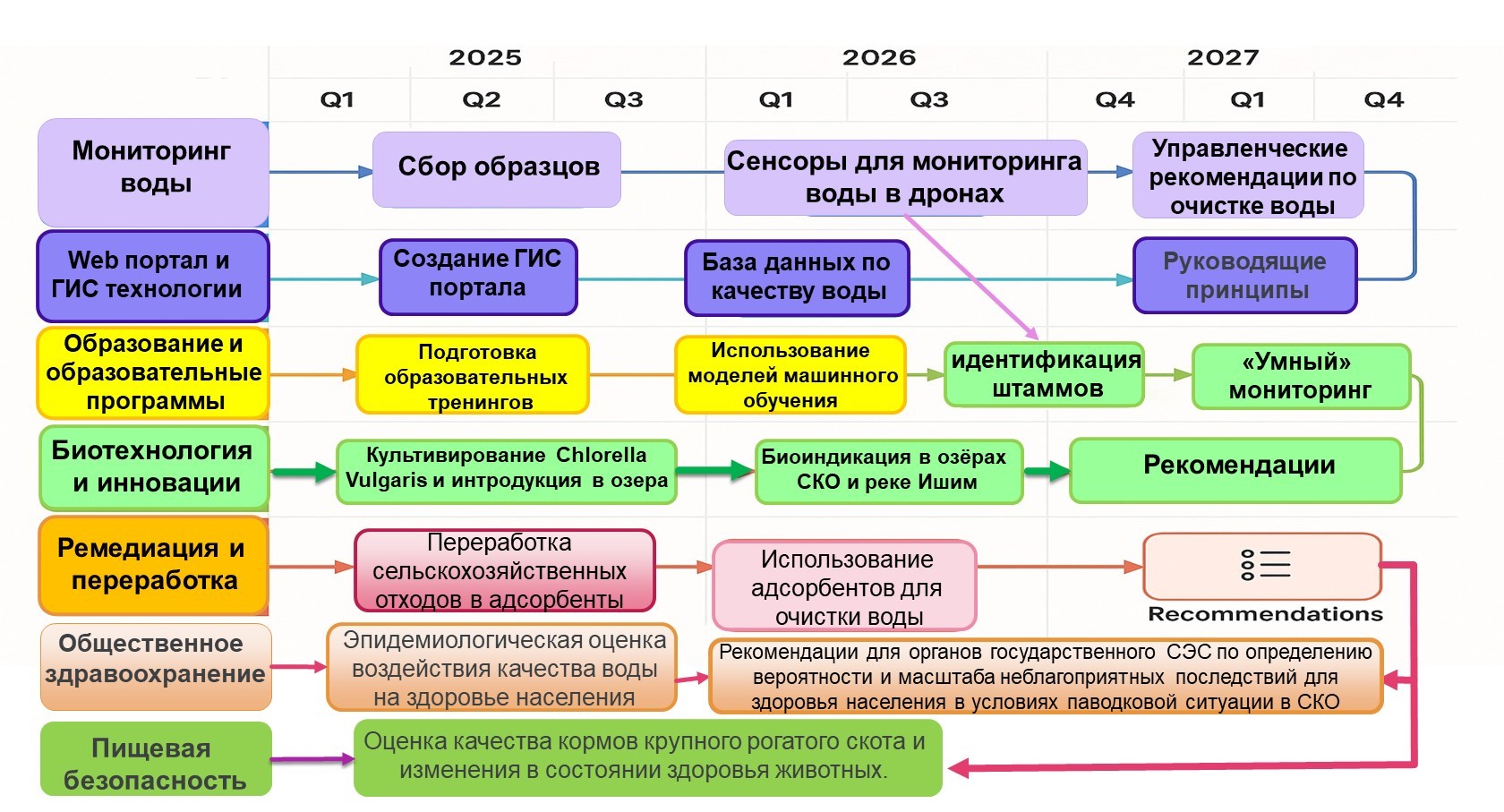
Project Description: The implementation of this scientific program will make a significant contribution to solving urgent problems related to providing the population of Northern Kazakhstan with water resources, strengthening food security and effective management of natural resources. In addition, the objectives of the Program will significantly strengthen the scientific and technological potential of the region, stimulating its innovative development. The program is structured in the form of five complementary blocks, each of which includes a specific list of tasks. The first four blocks are focused on the study of water resources problems and improving food security in the region, while the fifth block is focused on the creation of a scientific and technological laboratory complex:
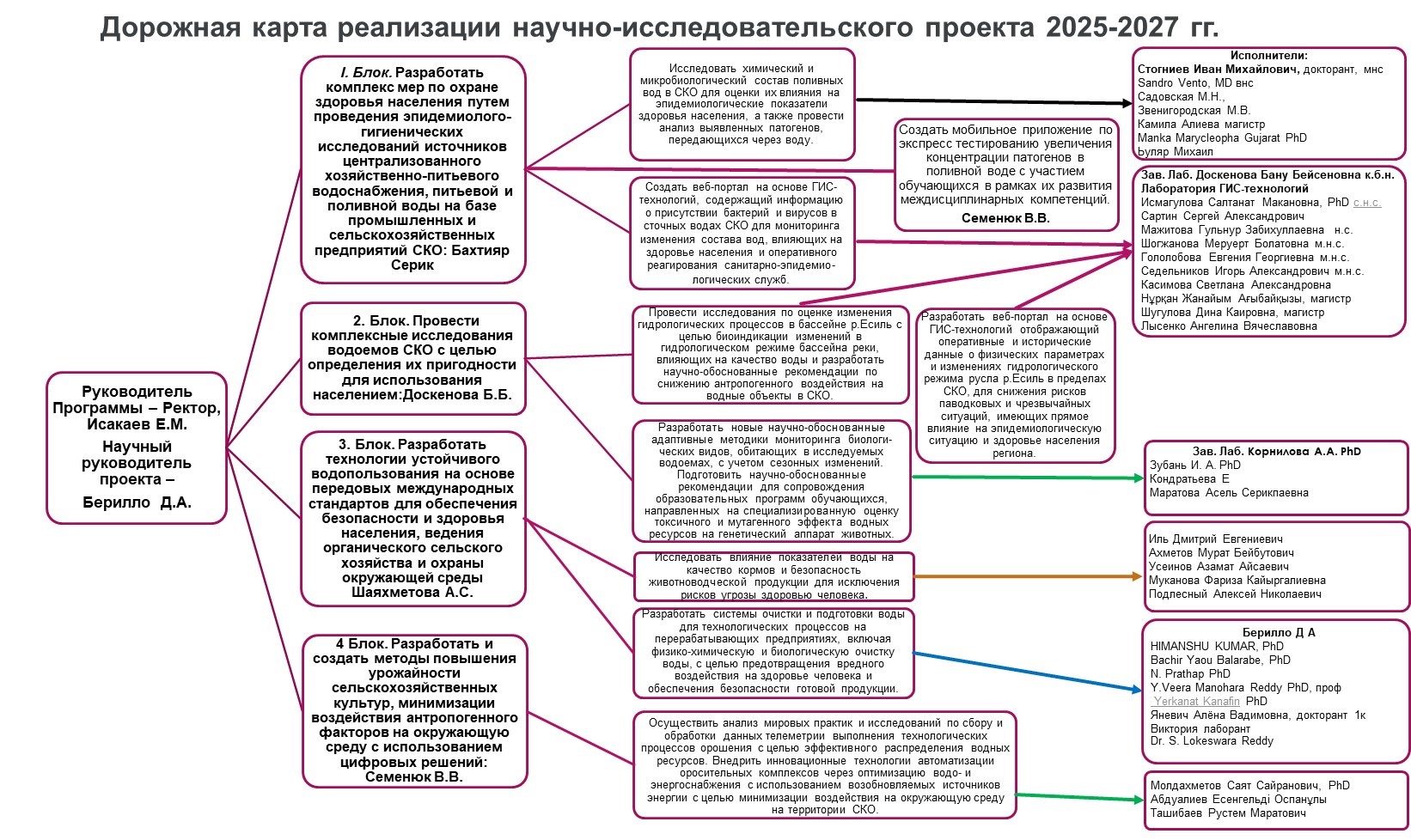
Block I.
To develop a set of measures to protect public health by conducting epidemiological and hygienic studies of sources of centralized household and drinking water supply, drinking and irrigation water on the basis of industrial and agricultural enterprises of North Kazakhstan region:
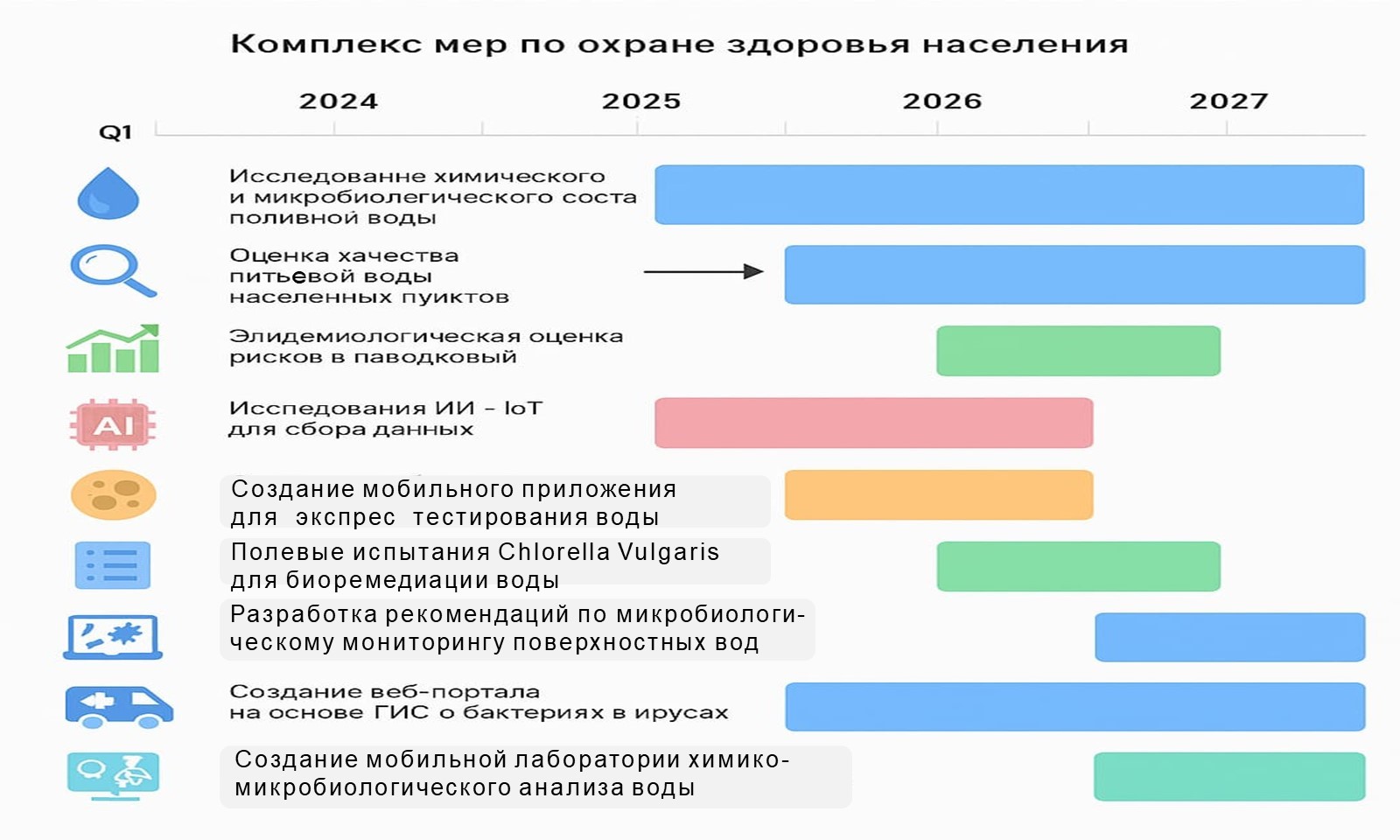
- To investigate the chemical and microbiological composition of irrigation waters in North Kazakhstan region to assess their impact on epidemiological indicators of public health, as well as to analyze the identified pathogens transmitted through water.
- To carry out a hygienic assessment of the quality of drinking water in the settlements of North Kazakhstan region, with the creation of a register of water resources of North Kazakhstan region with a description of the sources of their pollution.
- To provide an epidemiological assessment and forecast of the impact of the water quality of underground and surface water sources of North Kazakhstan Region on the health of the population, including the risks of seasonal changes during the flood period.
- To conduct research on the possibilities of using artificial intelligence to collect and process data from IoT devices in order to timely inform consumers about the environmental condition of water bodies, including the transfer of international experience.
- To create a mobile application for rapid testing of increasing the concentration of pathogens in irrigation water with the participation of students as part of their development of interdisciplinary competencies.
- To conduct experimental work to determine the effectiveness of the use of the technology of rehabilitation and purification of reservoirs using the strain of microalgae Chlorella vulgaris SKO A RKM-0870 for the implementation of a large-scale project for the rehabilitation of water bodies of North Kazakhstan region exposed to toxic blooming and/or anthropogenic pollution, including during extreme weather conditions, prolonged floods and floods in order to reduce risks threats to public health.
- To develop, taking into account international best practices, recommendations on monitoring the microbiological composition of waters for various purposes to support public health and rapid response measures in the context of infectious outbreaks and pandemics.
- To create a web portal based on GIS technologies containing information on the presence of bacteria and viruses in wastewater of North Kazakhstan region to monitor changes in the composition of waters affecting public health and prompt response of sanitary and epidemiological services.
- To create a mobile laboratory for chemical and microbiological analysis of water using innovative test systems in the conditions of North Kazakhstan region.
II. The block.
To conduct comprehensive studies of reservoirs of North Kazakhstan region in order to determine their suitability for use by the population:
- To conduct research to assess changes in hydrological processes in the Esil River basin in order to bioindicate changes in the hydrological regime of the river basin affecting water quality and to develop scientifically sound recommendations for reducing anthropogenic impact on water bodies in North Kazakhstan region.
- To develop new scientifically based adaptive methods for monitoring biological species living in the studied reservoirs, taking into account seasonal changes.
- To prepare scientifically based recommendations to support students' educational programs aimed at a specialized assessment of the toxic and mutagenic effects of water resources on the genetic apparatus of animals.
- To conduct experimental work to determine the effectiveness of biological rehabilitation technology using a strain of microalgae Chlorella vulgaris SKO A RKM-0870 to increase the productivity of fisheries reservoirs, reduce the risks of mass starvation of fish and maintain normal oxygen concentrations.
- To develop methods and criteria for bioindication of the main water bodies, including the river Yesil, border reservoirs (Sergeyevskoye) and the largest lakes, taking into account the requirements of regulatory legal acts of the Republic of Kazakhstan and scientific recommendations. Create a database in the form of a web portal of reservoirs with a high level of genetic toxicity and develop recommendations for their use in economic activities.
- To develop a web portal based on GIS technologies that displays operational and historical data on the physical parameters and changes in the hydrological regime of the Esil riverbed within North Kazakhstan region to reduce the risks of floods and emergencies that have a direct impact on the epidemiological situation and the health of the region's population.
III. Block.
To develop technologies for sustainable water use based on advanced international standards to ensure public safety and health, organic farming and environmental protection:
- To investigate the influence of water indicators on the quality of feed and the safety of livestock products in order to eliminate the risks of a threat to human health.
- To develop water purification and treatment systems for technological processes at processing plants, including physico-chemical and biological water purification, in order to prevent harmful effects on human health and ensure the safety of finished products.
- To develop a plant water consumption management model adapted to the climatic conditions of North Kazakhstan region in order to optimize irrigation regimes aimed at increasing productivity, quality of agricultural products and achieving sustainable development goals, conserving water resources and minimizing negative impacts on human health and the environment.
- To analyze the regulatory framework in the field of human health and environmental protection of the Republic of Kazakhstan. To develop a conceptual and legal framework to improve the quality of life and health of the population in North Kazakhstan region.
IV. Block.
To develop and create methods to increase crop yields and minimize the impact of anthropogenic factors on the environment using digital solutions:
- To carry out an analysis of world practices and research on the collection and processing of telemetry data for the implementation of irrigation processes in order to efficiently allocate water resources.
- To introduce innovative technologies for automation of irrigation complexes through optimization of water and energy supply using renewable energy sources in order to minimize the environmental impact on the territory of North Kazakhstan region.
- Students create prototypes of mobile applications for managing irrigation systems based on renewable energy sources as part of their qualification work.
- To develop innovative educational programs aimed at the formation of new personnel in the field of life sciences and healthcare.
Opening of new laboratories:
- Water quality assessment laboratory.
- Laboratory of Multimodal Microscopy and Biosensor Technologies.
- GIS Technology Laboratory.
- Microbiology laboratory.
- Agrochemanalyst's laboratory.
- Laboratory of Environmental Toxicology and Biodiversity.
Project Laboratories:
1. AgroChemAnalytics Laboratory (ACA) (Academic Building, Ground Floor)
Laboratory mission: To assess the agroecological and radiological characteristics of soils and animal feed, monitor contaminants in agricultural ecosystems, and promote sustainable agricultural water use and livestock product safety.
Head of Laboratory: Almaul Begalinova
Core laboratory activities:
Physicochemical analysis of soils and feed: Determination of pH, organic matter, macro- and micronutrient content.
Equipment:
- HPLC with UV detector, MGA-1000 atomic absorption spectrometer, PE-5300 VI spectrophotometer.
- Mobile laboratory for rapid on-site field assessment.
Determination of residual contaminants: Chromatographic analysis of pesticides, heavy metals, and organic compounds; assessment of contaminant bioaccumulation in soils and animal feed.
Equipment:
- Agilent 5977B GC/MS,
- Agilent 8890 gas chromatograph,
- RA-915M mercury analyzer.
2. Water Quality Assessment Laboratory (Academic Building, Ground Floor)
Laboratory mission: Comprehensive assessment of the physicochemical, organic, and microbiological composition of drinking water and surface water, including contaminant identification and evaluation of sanitary and epidemiological safety.
Head of Laboratory: Asemgul Bulatovna Zhapabayeva
Laboratory staff: Bakytgul Kabykenovna Masalimova (Candidate of Chemical Sciences, h-index 8, Leading Researcher), A.G. Meshchanova (Junior Researcher), Varvara Anatolyevna Rube (Researcher), N. Prathap, PhD, Dr. S. Lokeswara Reddy, Ilya Toporkov (Laboratory Assistant).
Core laboratory activities:
Physicochemical water analysis:
- Determination of turbidity, salinity, hardness, dissolved oxygen, heavy metal content, and anions (nitrates, sulfates, phosphates, etc.).
- Shimadzu UV-1900i UV spectrophotometer for the analysis of complex systems using differential spectrophotometry.
- 940 Professional IC Vario ion chromatograph for determining the ionic composition of drinking water and surface water.
- MGA-1000 atomic absorption spectrometer with electrothermal atomization.
- RA-915M mercury analyzer.
Organic composition and pesticides:
- HPLC coupled with a mass detector (Triple Quad 5500+ Liquid Chromatography–Mass Spectrometry System, AB Sciex, 5062231 + EXION AC).
- ALPHA II FTIR spectrometer with ATR module, offering a broad range of applications, including the analysis of grain, milk, and dairy products.
3. Environmental Toxicology and Biodiversity Laboratory (Building No. 2, 3rd Floor, Room 306)
Laboratory mission: To develop and implement scientifically validated methods for the bioindication of aquatic ecosystems in the North Kazakhstan Region, including the Ishim River, transboundary reservoirs (Sergeyevskoye Reservoir), and the region's largest lakes, in order to assess and mitigate anthropogenic impacts on water quality and biodiversity.
Head of Laboratory: Anna Alexandrovna Kornilova
Staff: I.A. Zuban (h-index 4), Assel Maratova, Ekaterina Sergeyevna Kondratyeva (Laboratory Assistant).
Core laboratory activities:
- Develop and validate bioindication methods and criteria for the principal water bodies of the North Kazakhstan Region, taking seasonal and hydrological variations into account.
- Conduct comprehensive studies of hydrological changes within the Ishim River basin and assess their impact on water quality and ecosystem health.
- Develop adapted methodologies for assessing biological species inhabiting enclosed water bodies, taking seasonal dynamics and environmental factors into consideration.
- Prepare scientifically substantiated recommendations to support educational programmes focused on the study of the toxic and mutagenic effects of water resources on the genetic systems of animals.
Laboratory mission: To conduct comprehensive research and hygienic assessments of water quality from centralized drinking water supply systems, potable water supplies, and irrigation water across the North Kazakhstan Region, as well as epidemiological assessments of groundwater and surface water sources in relation to public health, taking seasonal variations into account and forecasting risks associated with water quality deterioration.
Head of Laboratory: Serik Bakhtiyar
Laboratory staff: Ivan Mikhailovich Stogniev (Junior Researcher), Mikhail Mulyar (Junior Researcher), Rustem Serkebayev (Doctoral Researcher), Alexander Rudakov (Laboratory Assistant), Kamilla Muratayeva (Laboratory Assistant).
Core laboratory activities:
- Conduct microbiological and hygienic assessments of water quality in centralized drinking water supply sources, as well as drinking water and irrigation water throughout the North Kazakhstan Region.
- Assess seasonal fluctuations in water quality indicators, with particular emphasis on flood periods, identifying intervals of elevated contamination.
- Perform epidemiological analyses of groundwater and surface water sources to evaluate their impact on public health.
- Develop methodologies for diptych-based analysis and water quality assessment adapted to the regional characteristics of the North Kazakhstan Region and contemporary environmental conditions.
- Forecast potential risks and hazards associated with water quality, providing an evidence base for preventive measures aimed at protecting public health.
- Prepare scientifically substantiated recommendations for public health authorities and water supply organisations to ensure water resource safety and reduce sanitary and epidemiological risks.
5. GIS Technologies Laboratory (Academic Building, Ground Floor)
Laboratory mission: Environmental monitoring of water, soil, air, and biodiversity using remote sensing technologies and Geographic Information Systems (GIS) for the rapid identification and mapping of environmental risks.
Head of Laboratory: Igor Alexandrovich Sedelnikov
Laboratory staff: Sergey Alexandrovich Sartin, Saltanat Makanovna Ismagulova, PhD, Senior Researcher, Gulnur Zabikhullayevna Mazhitova, Researcher, Meruert Bolatovna Shogzhanova, Junior Researcher, Evgeniya Georgievna Gololobova, Junior Researcher, Svetlana Alexandrovna Kasimova, Dina Kairovna Shugulova, Junior Researcher, Banu Beisenovna Doskenova, Candidate of Biological Sciences.
Core laboratory activities:
- Collection and interpretation of spatial environmental data:
Application of ERA software for the collection, analysis, and visualisation of water, air, and soil quality data. Environmental monitoring followed by integration of datasets into GIS platforms.
- Aerial surveying and multispectral mapping: Acquisition of high-resolution multispectral and RGB imagery using unmanned aerial vehicles (UAVs):
- Geoscan 201 — for multispectral imaging;
- Geoscan 401 Geophysics and Geoscan 401 with GNSS — for geophysical and topographic surveys;
- BB4-Mini with AlphaAir — for laser scanning and 3D modelling;
- Geoscan Pioneer — educational and training platform;
- Sony ZV-E10 camera — high-resolution photographic imaging.
- Georeferencing and navigation: Determination of precise coordinates (X, Y, Z) of contaminated sites (water bodies, wastewater discharge points, etc.) using high-precision geodetic equipment:
- CHCNAV iBASE and CHCNAV i73+.
- Assessment of genotoxicity and biological hazards: Identification of water bodies exhibiting elevated genotoxicity and pathogen presence through remote and in situ analyses. Provision of spatially accurate data to other laboratories in support of chemical and biological analyses.
Expected outcomes:
- Development of an environmental and hydrological GIS map of the region indicating the coordinates of contaminated sites and associated risk levels.
- Identification and continuous monitoring of areas with elevated toxicity, microbiological hazards, and environmental contamination.
6. Multimodal Microscopy and Biosensor Technologies Laboratory (Building 2, Ground Floor, Room 106a)
Laboratory mission: To develop and implement advanced methods for the analysis and monitoring of water quality, biological fluids, and the environment based on multisensor approaches, high-resolution microscopy, and state-of-the-art sample preparation technologies, with future application to high-throughput clinical sample analysis.
Head of Laboratory: Dr Akmaral Sulemenova (h-index 5)
Laboratory staff: Vladislav Vladimirovich Semenyuk, Senior Researcher; Muhammad Saqib Saif, PhD, Senior Researcher (h-index 18); Dr S. Lokeswara Reddy (h-index 6); Dr Anastassiya Gadetskaya, Leading Researcher (h-index 8); Dr Kainizhamal Yesimseitovna Iklassova, Researcher; Polina Kudryavtseva (Laboratory Assistant).
Core laboratory activities:
- Development and validation of next-generation biosensor systems, including electrochemical biosensors based on molecularly imprinted polymers (MIPs) for the selective detection of toxic substances (pesticides, heavy metals, and bacterial toxins), as well as potentiostatic and impedance sensors for the analysis of water from various sources and biological samples.
- Sample preparation and concentration. Development of filtration materials and adsorbents (including cryogel-based materials) for the preconcentration of trace contaminants; application of cryostats, freeze-drying, and vacuum plasma cleaning for sample preparation prior to microscopy and electrochemical analysis.
- Microscopic and spectroscopic analysis. Application of fluorescence and confocal microscopy for the analysis of cells, microorganisms, plant tissues, and biological specimens; utilisation of scanning electron microscopy for the morphological analysis of filters, soil samples, minerals, and bacteria before and after purification and bioremediation processes.
- Physicochemical and thermodynamic investigation of biological processes. Measurement of the thermal effects associated with microbial growth using an isothermal calorimeter to monitor bioremediation processes and assess microbiological activity.
- Water quality assessment and nanoparticle characterisation. Determination of nanoparticle size, surface charge, and distribution using the Zetasizer Lab system; development of rapid analytical methods for drinking water, wastewater, and surface water quality assessment.
- Development of calibration and confirmatory analytical methodologies. Application of high-performance liquid chromatography coupled with mass spectrometry (HPLC-MS) as a confirmatory analytical technique for validating biosensor data and developing calibration models.
Planned Startups
- Startup: Water filtration systems for drinking water purification and agricultural process water treatment.
- Startup: Soil moisture-retaining polymers and soil erosion protection solutions.
- Startup: Biotechnological conversion of agricultural waste into organic fertilisers.
- Startup: Development of a mobile sensor for real-time water quality monitoring in natural water bodies.
Commercialisation
- Provision of water and agricultural product analysis services by two accredited laboratories.
- Consultancy services on water treatment systems for Kyzylzhar Su, Eurasia Milk, Raduga, and other organisations.
- Analytical services provided within the framework of other research projects funded under General Grant Funding (GGF), Programme-Targeted Funding (PTF), Young Scientist Grant Funding (YSGF), the Zhas Galym programme, and internal university grants through the procurement of consumables for accredited laboratories in accordance with the standard analytical service price list.
- Environmental monitoring consultancy services.
- Attracting investment for startup companies.
- Submission of commercialisation proposals to the Science Foundation of the Republic of Kazakhstan.
Doctoral Training Plans through the End of 2027
1 doctorate successfully defended on 23 May 2026 — Akzhonas Yermekovna Khamitova, "Synthesis and Investigation of Active Pharmaceutical Ingredients Based on Nitrogen-Containing Heterocyclic Compounds", PhD programme 8D10102 – Pharmacy, supervisor: Prof. D.A. Berillo.
1) Anna Meshchanova, Year 3, Technology for the Production of Biologically Active Preparations Based on Balsam Poplar with Growth-Stimulating Properties, PhD programme 8D07102 – Chemical Technology of Organic Substances, defence scheduled for 2026.